
You walk out to your car, start it up, and it roars like a race car that lost its muffler. That gut-drop moment usually means one thing: someone slid underneath overnight, cut out your catalytic converter, and drove off with it — often in under two minutes.
For a while, this crime was fading. Reported thefts dropped sharply through 2023 and 2024. But in 2026 it's climbing again, and the reason has almost nothing to do with your car and everything to do with a commodity market most drivers never think about.
Catalytic converter theft rises and falls with the price of the precious metals inside it — platinum, palladium, and rhodium, which is worth more than gold. When those prices spiked in early 2026, thefts followed. You can't control the metals market, but you can make your vehicle a harder, less appealing target with a few low-cost steps: etch it, light it, shield it, and park it smart.
Why anyone wants your catalytic converter
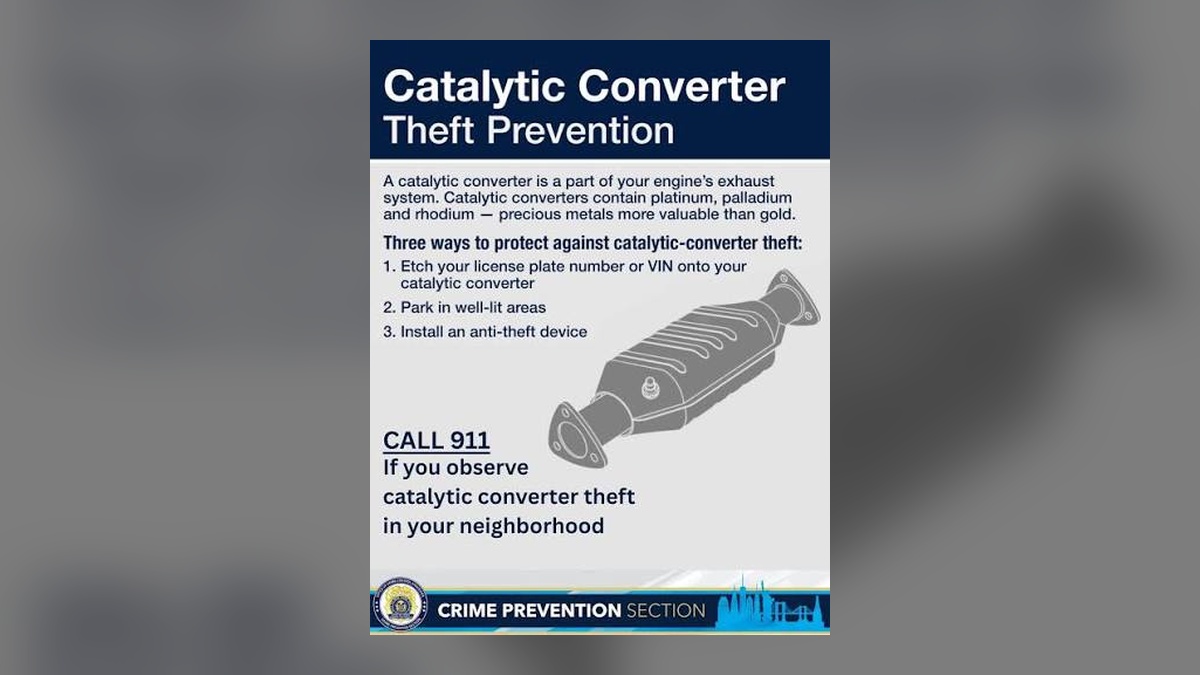
Your catalytic converter is a part of your engine's exhaust system. Its job is to scrub the harmful gases coming out of your engine before they leave the tailpipe — which is exactly why it matters at smog time. To do that scrubbing, the converter is lined with tiny amounts of three precious metals: platinum, palladium, and rhodium.
Those metals are staggeringly valuable — in some periods, rhodium has traded for several times the price of gold. A thief with a battery-powered saw can cut a converter loose in a couple of minutes and sell it to an unscrupulous scrap buyer for a few hundred dollars. There's no VIN stamped on it from the factory, so once it's off your car, it's very hard to trace.
So why is it spiking again in 2026?
Follow the metals and you'll understand the crime. The theft rate closely tracks the market price of platinum-group metals, and 2026 saw a sharp move upward. Rhodium climbed past $11,000 an ounce in early 2026 — well above the roughly $5,000 range it held through most of 2024 and 2025 — while platinum more than doubled over the course of 2025. When a single converter's scrap value jumps, the incentive to steal one jumps right along with it.
That's why this crime moves in cycles rather than disappearing for good. The big run-up happened between 2019 and 2022, thefts fell off from 2022 to 2024 as prices cooled and states cracked down, and now the 2025–2026 metals rebound is pulling the numbers back up. Some cities have already reported more thefts in the first months of 2026 than in all of the prior year. It's a predictable pattern: when the metals get expensive, the sawing starts again.
Which vehicles get targeted most
Thieves aren't picking cars at random. They go for the ones that are quick to get under and rich in metal:
- Hybrids, especially the Toyota Prius. Hybrid converters run cooler and see less use, so their precious metals stay less "used up" — meaning a higher payout. The Prius is one of the single most targeted vehicles in the country.
- Trucks and SUVs like the Ford F-Series. Their extra ground clearance means a thief can slide underneath without even jacking the vehicle up. On some trucks the converter is also part of a larger, pricier assembly, which drives up the replacement cost dramatically.
- Anything parked in the open overnight. Beyond make and model, opportunity matters most. A vehicle sitting on the street or in an unlit lot is far easier to hit than one behind a garage door or under a camera.
That said, no vehicle is truly immune. Thefts have happened in driveways, apartment lots, shopping centers — even from police vehicles parked at a station.
The part that hits home in California: your smog check
Here's the angle a lot of drivers don't see coming until it's too late. If your converter is stolen, your car won't just be loud — it will fail its smog check automatically. The converter is the heart of the emissions system, and without it there's nothing to clean up the exhaust. Your check engine light will come on, the vehicle won't pass, and you won't be able to complete your DMV registration until it's fixed.
And in California there's an added wrinkle: you can't just bolt on the cheapest replacement. State law requires a CARB-compliant converter — one approved for use in California — not a generic universal unit that's legal in other states. Installing the wrong part means failing smog all over again. Replacement costs commonly run from about $1,500 to $3,000 or more, and supply backlogs can leave you waiting weeks for the right part.
Translation: a two-minute theft can turn into a multi-week, multi-thousand-dollar headache — which is exactly why prevention is worth a little effort up front.
How to protect yours — the steps that actually work
No single trick makes a car theft-proof, but thieves overwhelmingly go for the path of least resistance. Stack a few of these together and they'll usually move on to an easier target:
- Etch your license plate or VIN onto the converter. A marked converter is far harder for a scrap buyer to accept, which makes it less attractive to steal in the first place. Many police departments and shops offer etching, and bright high-temperature paint adds another visible "this one's traceable" flag.
- Install an anti-theft device. Purpose-built shields, cages, and clamps (brands like CatClamp and MillerCAT are common) bolt over or around the converter and add serious time and noise to any theft attempt. A muffler shop can fit one in a single visit.
- Park in well-lit, visible areas. A garage overnight is the best deterrent there is. No garage? Choose lit lots, park close to building entrances and cameras, and angle the vehicle so the underside is hard to reach — nose-in against a wall, or boxed in by other cars.
- Add a tilt or vibration alarm. An inexpensive sensor that triggers when the car is jostled or lifted can scare off a thief mid-cut, when noise is the last thing they want.
- Vary where you park. Thieves scout routines. Mixing up your overnight spot makes your vehicle a less predictable, less appealing mark.
Don't approach — these thefts happen fast and the tools are dangerous. Note what you can safely observe and call 911. Your report helps police connect incidents across the neighborhood.
What to do if it already happened
If you start your car to that unmistakable roar, resist the urge to keep driving it far — running without a converter is loud, bad for the engine over time, and won't pass smog. File a police report (you'll likely need it for insurance), and check your coverage: comprehensive auto insurance typically covers converter theft, minus your deductible. Then get a CARB-compliant replacement installed so the car can be re-tested and registered.
A few common questions
How long does it take to steal a catalytic converter? Often under two minutes. That speed is a big part of why the crime is so common — a thief can be gone before anyone notices.
Will my car pass smog without the converter? No. A missing or gutted converter is an automatic smog failure in California, and it will usually trip your check engine light too.
Can I use any replacement converter? Not in California. The state requires a CARB-approved (CARB-compliant) converter. A universal aftermarket unit that's fine elsewhere will fail your smog check here.
Does insurance cover it? Comprehensive coverage generally does, subject to your deductible. Liability-only policies typically won't. It's worth confirming your coverage before you ever need it.
Are electric cars at risk? No — fully electric vehicles don't have catalytic converters at all, so there's nothing to steal. Hybrids, however, are among the most targeted vehicles on the road.
The bottom line
Catalytic converter theft is cyclical, and 2026's rising metal prices have brought it back around. You can't move the commodities market, but you can make your vehicle the one thieves skip: etch it, shield it, light it, and park it smart. Those small steps cost far less than a CARB-compliant replacement and a failed smog check.
Worried your car might have been tampered with, hearing a new rattle or roar, or just want to know where your emissions system stands before your smog is due? Bring it by. As a STAR Certified station in Simi Valley, we can run your smog check or give you a pre-test read so there are no surprises. Call (805) 526-9716 or drive in to 2405 Sycamore Dr.