You pull up to the pump, and across the street there's a no-name station selling the same octane for fifteen cents less. Does it actually matter which one you choose? It's one of the most common car questions out there — and the answer isn't quite what most people assume.
The brand name on the sign matters far less than one specific thing: whether the fuel meets the Top Tier standard. That single distinction, not brand loyalty, is what separates gas that keeps your engine clean from gas that slowly gunks it up.
What matters isn't sticking to one brand — it's whether the gas is Top Tier. Top Tier fuel carries 2 to 5 times the detergent of the federal minimum, and independent AAA testing found that non-Top Tier gas left 19 times more engine deposits after just 4,000 miles. Those deposits raise emissions — which is exactly what gets measured at your smog check.
All gasoline is not the same — but not for the reason you'd think
Here's what surprises people: gasoline is essentially a shared commodity. Fuel from different brands often comes from the same refineries and pipelines and sits in common storage before it's ever branded. What actually makes one brand different from another is the additive package the retailer blends in before it reaches the pump.
Since 1996, the EPA has required a minimum level of detergent additive in all gasoline sold in the U.S. But some automakers felt that minimum didn't go far enough to protect modern engines. So in 2004 they created a stricter, voluntary standard called Top Tier — and today it's backed by carmakers including BMW, General Motors, Ford, Honda, Toyota, Volkswagen, and Mercedes-Benz.
What Top Tier gas actually does
Top Tier fuel does two things that matter for your engine and your emissions:
- More detergent. It contains 2 to 5 times the detergent additives of the EPA minimum, which keeps carbon deposits from building up on intake valves, fuel injectors, and in the combustion chamber. In AAA's testing, Top Tier fuels left engines dramatically cleaner — and were even shown to reduce existing deposits by 45 to 72 percent over a few thousand miles of use.
- No harmful metallic additives. Top Tier prohibits the organo-metallic additives found in some cheaper fuels — the kind known to damage catalytic converters. Since the catalytic converter is central to your car's emissions system, this matters a lot at smog time.
Why care about deposits? Because carbon buildup does three things nobody wants: it reduces fuel economy, it causes drivability problems like rough idle and hesitation, and — most relevant here — it increases tailpipe emissions.
Premium and Top Tier are not the same thing
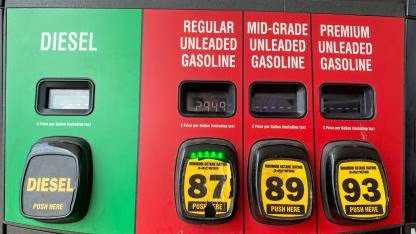
This is the point that trips up almost everyone. When a station splits its fuel into regular, mid-grade, and premium, that's the octane rating — a measure of how much the fuel resists "knocking" under compression. Some high-performance engines require higher octane; most engines don't.
Octane has nothing to do with detergents. Buying premium does not mean you're getting more engine-cleaning additives. And here's the good news: at a licensed Top Tier retailer, every octane grade is Top Tier — so you get the full cleaning benefit even with regular unleaded.
The practical takeaway: unless your owner's manual specifically calls for premium, paying for it is usually just money down the drain. Focus on Top Tier, not the octane number.
How this connects to your smog check
This is where fuel quality stops being abstract. Two of the things cheap, low-detergent gas can cause are directly tied to passing or failing an emissions test:
First, carbon deposits raise emissions. An engine coated in gunk burns fuel less cleanly, and that shows up in the numbers we measure during a smog check. Second, the metallic additives in some bargain fuels can damage your catalytic converter — and a failed catalytic converter is one of the most common and most expensive reasons a vehicle fails smog. Replacing one can run many hundreds of dollars.
Seen that way, consistently running Top Tier gas is cheap insurance. It costs, on average, only about three cents more per gallon — a rounding error next to a converter replacement or a failed emissions test.
So which brand should you actually buy?
Don't chase a specific brand name — look for the Top Tier label. More than 100 gasoline brands meet the standard, including most major national stations and even some membership warehouse retailers. Discount price at the pump doesn't automatically mean low quality; plenty of lower-priced stations are Top Tier certified. The label (or the retailer's website) tells you what you need to know.
A few common questions
Does expensive gas really clean my engine? Top Tier gas does, thanks to its detergent package — but "expensive" and "premium" refer to octane, not detergents. A Top Tier regular does more for engine cleanliness than a premium fuel that isn't Top Tier.
Is premium gas worth it? Only if your manufacturer requires or recommends it. For most vehicles, premium is an unnecessary expense that delivers no benefit.
Can bad gas make my car fail a smog check? Indirectly, yes. Over time, low-detergent fuel builds up deposits that raise emissions, and metallic additives in some cheap fuels can damage the catalytic converter — both of which can contribute to a failed test.
Is warehouse-club or discount gas low quality? Not necessarily. Many discount and warehouse retailers are Top Tier certified. Look for the label rather than assuming price reflects quality.
The bottom line
The specific brand on the sign matters much less than whether the fuel is Top Tier. Fill up with Top Tier gas in whatever octane your car actually calls for, and you protect your engine, your fuel economy, and — when it counts — your emissions.
If your check engine light is on, your car feels rough, or you just want to know where you stand before your smog is due, bring it by. As a STAR Certified station in Simi Valley, we can run your smog check or give you a pre-test read so there are no surprises. Call (805) 526-9716 or drive in to 2405 Sycamore Dr.