
Most vehicles pass their smog check on the first try, but a surprising number fail because of small things that could've been prevented with a few minutes of effort. After 25+ years of running smog tests in Simi Valley, we've seen patterns. Here's what actually works.
1. Make sure your check engine light is OFF
This is the single biggest reason vehicles fail smog. If your check engine light (also called the MIL — Malfunction Indicator Lamp) is illuminated, your vehicle will fail the smog check automatically, regardless of what's actually wrong.
If the light is on, get the underlying problem diagnosed and fixed before coming in. After repairs, you'll need to drive at least 50–100 miles for the OBD II system to complete its "drive cycle" and confirm everything is working.
Disconnecting the battery or using an OBD scanner to clear codes won't help — it just resets the readiness monitors, which then need to complete a full drive cycle before the smog test will work. The shop will see "not ready" status and fail you. Just fix the actual problem.
2. Drive your car for 20 minutes before the test
Cold engines pollute more than warm ones. The catalytic converter in particular needs to reach operating temperature (around 800°F+) to properly process exhaust gases. A car that's been sitting overnight in cold weather will produce significantly higher emissions during the test.
Drive your car for at least 15–20 minutes on the freeway before bringing it in for the smog check. This warms up everything — engine, exhaust, catalytic converter, oxygen sensors — and gives you the best chance of clean readings.
3. Check your gas cap (yes, really)
One of the failure points in California's smog inspection is the EVAP (evaporative emissions) system, which keeps fuel vapors from leaking into the atmosphere. The most common EVAP failure: a loose, missing, or worn-out gas cap.
Before your test, check that your gas cap clicks securely closed. If it's old, cracked, or doesn't seal well, replace it — they're under $20 at any auto parts store.
4. Top off your fuel and use better gas
Run your tank above ¼ full when you bring the car in. A near-empty tank means the fuel pump is working harder and pulling sediment from the bottom of the tank — both of which can affect emissions.
If your car has been getting low-grade fuel or has been sitting unused, fill up with mid-grade or premium and add a bottle of fuel system cleaner like Techron or Sea Foam a few hundred miles before the test. This won't perform miracles, but it can help marginal vehicles squeak across the line.
5. Get an oil change before your test
Old, dirty oil produces more crankcase emissions. If your oil is past due for a change, get it done before the smog test. Fresh oil burns cleaner.
6. Check your tire pressure
This sounds unrelated but it actually matters. Properly inflated tires improve fuel efficiency and produce cleaner emissions during the dyno-based test (for older vehicles). Set tire pressure to the manufacturer's recommended PSI before coming in.
7. Don't smog a car that's been sitting for months
Vehicles that haven't been driven in weeks or months have accumulated condensation, the battery may be weak, the oxygen sensors may be sluggish, and the OBD II monitors may not be ready. If your car has been parked for a while, drive it for at least a week — preferably with several freeway trips — before bringing it in.
8. Address visible problems
Some smog failures are visual: missing emission control components (someone removed the catalytic converter at some point), modified intake systems, or aftermarket parts that aren't CARB-certified. The technician will fail your vehicle on inspection if anything is obviously wrong.
If your car has aftermarket performance parts, make sure they have a CARB EO (Executive Order) number. Without that, the modification is a smog failure regardless of how clean the actual emissions are.
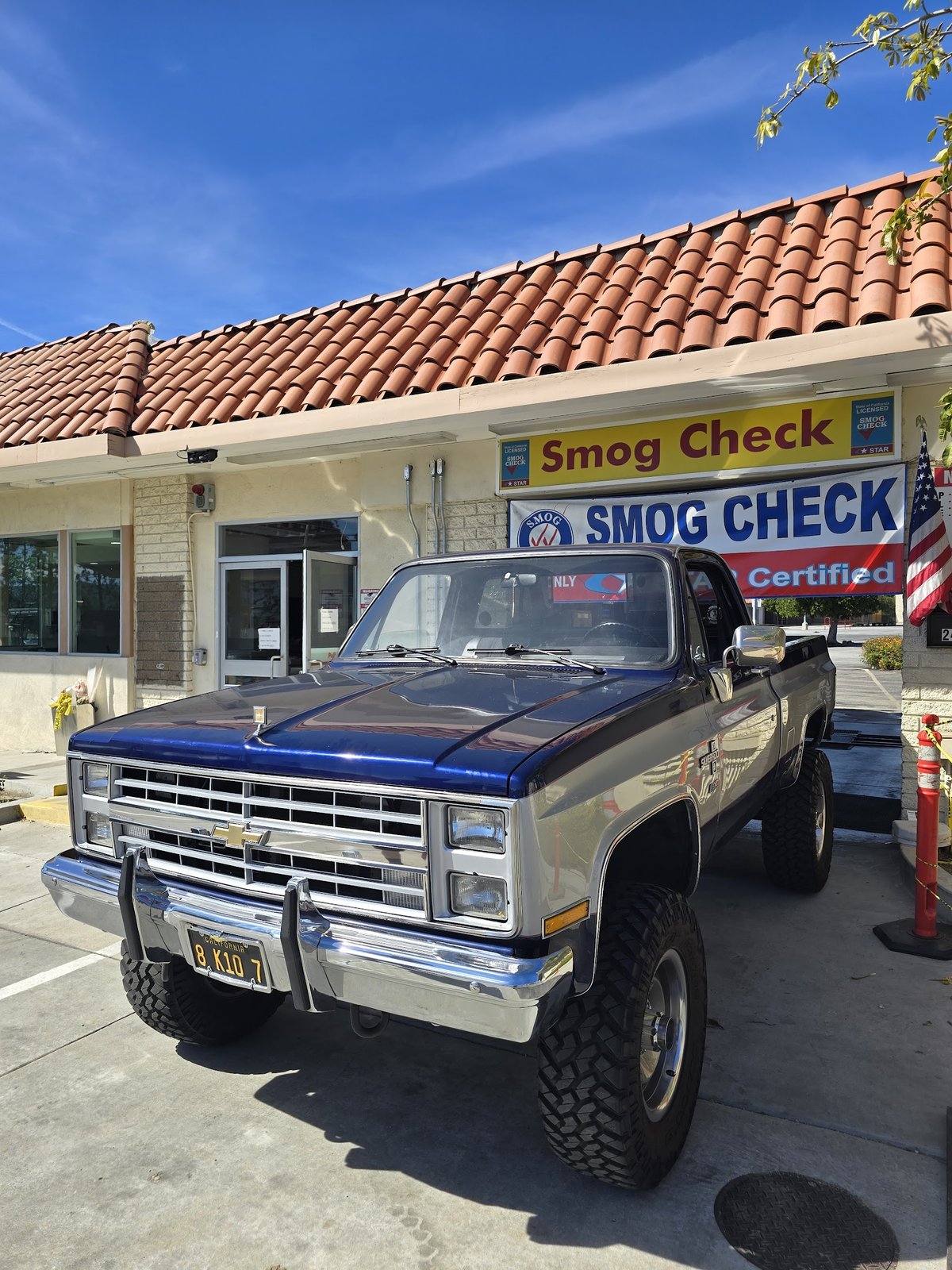
9. Pick the right time of day
For best results, bring your car in during regular daytime temperatures — not the hottest part of the afternoon, not first thing in the morning when everything's cold. Mid-morning to early afternoon (10am–2pm) is usually ideal.
10. Use a STAR-certified station with a fair re-test policy
Even with everything done right, some vehicles fail. Pick a station that offers a free or reduced-price re-test if you fail. At Simi Smog & Wash, our coupon includes 1 free re-test within 30 days — so even if you have to do repairs, you're not paying twice.
Ready for your smog check?
Drive in to 2405 Sycamore Dr — no appointment, $10 OFF with coupon, pass or 1 free re-test.
Call (805) 526-9716What if I follow all these tips and still fail?
It happens. Modern OBD II systems are sensitive and there are dozens of components that can throw an emissions code. The good news: a failed smog check tells you exactly what's wrong, and most issues are fixable. Common failure causes include:
- Failed oxygen sensor — $50–200 part, simple repair
- Failed catalytic converter — most expensive common failure ($500–2,000)
- Failed EGR valve — typically $100–400 to replace
- Vacuum leak — often a torn hose, can be cheap to fix
- Failed gas cap or EVAP system — usually under $50
Take your failure report to a smog repair shop. Get the underlying issue fixed. Bring it back to us — we'll re-test for free with the coupon.