You went online to renew your registration, or you opened the DMV notice in the mail, and there it was: your smog certification has to come from a STAR station. Maybe it even said "Smog certification from a STAR-certified station is required." If that left you wondering what you did wrong — the short answer is nothing. It's a routine part of California's smog program, and plenty of perfectly healthy cars get the same message.
Still, it raises fair questions. What makes a STAR smog check different? Why was your car singled out when your neighbor's wasn't? And does it cost you more? Let's clear it all up.
A STAR smog check is a normal smog inspection performed at a station that meets higher performance standards set by California's Bureau of Automotive Repair (BAR). Your vehicle was directed to a STAR station by the state — sometimes because of its profile or history, sometimes at random as a quality-control check. The test itself is the same. The difference is where it has to be done, and that station's track record for accuracy.
First, what "STAR" actually means
STAR is a certification the state's Bureau of Automotive Repair awards to smog stations that meet stricter standards than the baseline license. To earn and keep it, a station has to demonstrate that its inspections are accurate and consistent — the state actively monitors each STAR station's performance and holds it to those benchmarks over time.
So a STAR smog check isn't a harder or different test bolted onto your car. It's the same state-defined smog inspection, carried out at a station the state has vetted more closely and continues to watch. Think of it less like a tougher exam and more like being asked to take the same exam at a proctored testing center.
Why your renewal says "STAR station required"
California doesn't send every car to a STAR station. Instead, the state directs a portion of vehicles there each cycle. If your registration renewal specifies STAR, your car landed in that group for one of a few reasons:
- Your vehicle's profile flagged it. The state uses data to identify vehicles that are statistically more likely to have emissions problems — based on factors like the make, model, model year, and how that class of vehicle has performed in the program. If yours fits a higher-risk profile, it can be directed to STAR.
- Its history. A vehicle that has failed a smog check before, or has a record that suggests closer scrutiny is warranted, is more likely to be sent to a STAR station.
- Random selection. A share of vehicles is chosen essentially at random, regardless of condition. This is a quality-control measure — it lets the state spot-check inspections across the whole fleet, not just the cars it already suspects. If this is you, your car may be in perfect shape; it simply drew the short straw this cycle.
The key takeaway: being directed to STAR is not an accusation that your car is dirty. It's how the program keeps its data honest and its inspections reliable across millions of vehicles.
Is a STAR check different from a regular smog check?
For you, the driver, it feels the same. The technician runs the same state-mandated inspection — checking your emissions system, reading your vehicle's onboard computer, verifying there are no tampered or missing components, and confirming the results transmit to the state. Newer vehicles are largely evaluated through their onboard diagnostics (OBD-II) system, while some older cars still get a tailpipe-style measurement. None of that changes because the station is STAR.
What changes is the standard the station is held to. A STAR station's equipment, procedures, and pass/fail accuracy are monitored more closely, which is exactly why the state trusts it to handle directed vehicles. If your notice requires STAR, the certificate only counts if it comes from a STAR station — a regular station's certificate won't satisfy the DMV in that case.
Does a STAR check cost more or take longer?
Not because of the STAR designation itself. A STAR station charges its normal smog-check price, and the inspection takes about the same time as anywhere else — most cars are in and out quickly. Prices vary by station and by vehicle type, but "STAR" is not a surcharge. You're paying for a smog check; you're just having it done somewhere the state has certified to a higher bar.
Test-only vs. test-and-repair — and why it matters here
STAR stations come in two flavors. A test-and-repair station can both inspect your car and fix it if it fails. A test-only station — like ours — is licensed only to test, not to perform repairs. That separation is intentional: because a test-only station has no financial reason to fail your car and then sell you a repair, its results carry an extra layer of impartiality. If your renewal requires a STAR station, a test-only STAR station always qualifies.
What if I accidentally go to a non-STAR station?
If your notice specifies STAR and you get tested at a regular (non-STAR) station, the certificate won't be accepted for your registration — you'd have to get re-tested at a STAR station anyway. It's worth checking your DMV notice before you drive anywhere so you don't pay twice. When in doubt, a quick call to confirm a station is STAR-certified saves the trip.
A few common questions
Did my car get flagged because something's wrong with it? Not necessarily. Many directed vehicles are chosen by profile or at random and pass with no issues at all. Being sent to STAR is about the program's oversight, not a verdict on your car.
Will I definitely need STAR every year? No. Direction can change from cycle to cycle. You might be sent to STAR one renewal and not the next, depending on the state's selection that year.
Can any STAR station test my car, or does it have to be a specific one? Any STAR-certified station can perform the check. You're free to choose whichever STAR station is most convenient.
Is a test-only STAR station as good as a test-and-repair one for my check? For the inspection itself, yes — both are held to the same STAR standards. A test-only station simply can't do the repairs afterward if you fail, so you'd take the car elsewhere to fix it and then return to re-test.
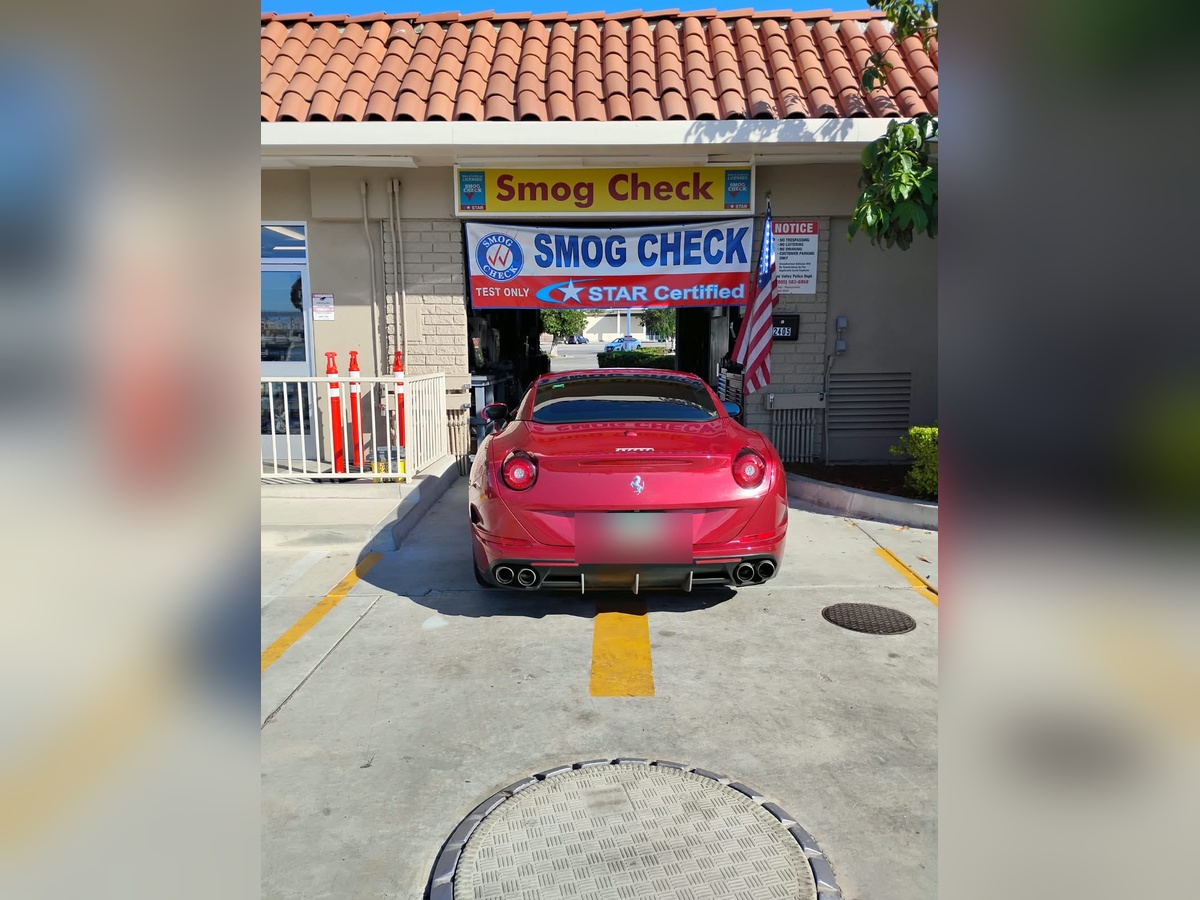
How do I know for sure my station is STAR? STAR stations display the STAR Certified sign and are listed by the state. Want the deeper background on the certification itself? See our companion guide, What Is a STAR Certified Smog Station?
The bottom line
A STAR smog check is the same inspection your car would get anywhere — just performed at a station the state has certified to a higher standard and continues to monitor. Your vehicle was directed there because of its profile, its history, or a random quality-control draw, and in most cases none of those means anything is actually wrong. Show up at any STAR-certified station, pass your check, and you're on your way to renewing your registration.
Need a STAR smog check in Simi Valley? We're a STAR Certified, test-only station — the kind that qualifies whenever your DMV notice requires STAR — and most cars are in and out quickly with no appointment needed. Check out our STAR Smog Check service, call (805) 526-9716, or drive in to 2405 Sycamore Dr.